


Pay-ins and processingThis is the main module. Customers pay through a local method, and Payment Gateway Africa processes the transaction and records its outcome. For each transaction, your system receives postbacks and webhooks so your backend knows the result. These notifications go to you, the merchant. We do not send separate notifications to your customers, so your own order flow stays in control of customer messaging.
Payment Gateway Africa:
One Connection for Seven Markets
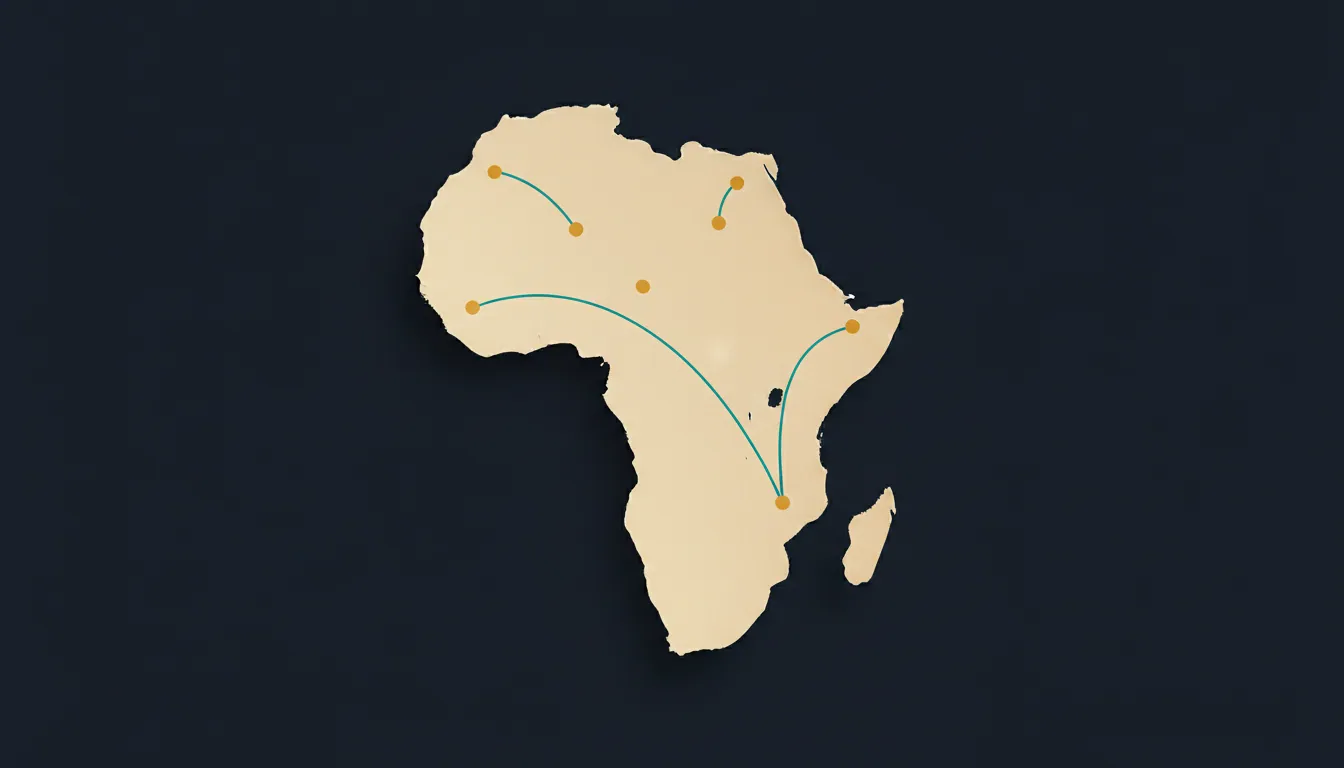
Payment Gateway Africa, your local payment partner, links your checkout to the wallets and local methods customers already use in Kenya, Egypt, Ethiopia, Senegal, Tunisia, Mali and Guinea. Integrate once through the H2H API or the Hosted Payment Page to collect pay-ins, send payouts where the method and project support them, and receive merchant settlements dispatched same day (T+0), with bank posting times varying.
01
Why a Local-Method Gateway Fits African Markets
Many merchants enter African markets with a checkout designed around cards. Offering local wallets and other local methods lets customers pay with options they already know.
Payment Gateway Africa starts from the methods each market already uses. We then put them behind one integration, so your engineering team does not need to build a separate connection for every country.
In practice, your teams work with one integration and one set of status notifications. You can still present each customer with a method they recognise. Existing merchants can add supported methods on the same integration at no extra connection fee.
If you are comparing options for an African payment gateway, ask three questions. Does it support the specific wallets your customers hold? Does it keep pay-ins, payouts and settlement as separate flows? Can you add supported methods later without a higher connection price? The rest of this page answers those questions for Payment Gateway Africa.
02
Seven Markets, One Connection
The router below shows each market we support. For every country it gives the local currency and the confirmed methods available through Payment Gateway Africa. Each country page lists the supported methods for that market.
East Africa — Kenya · KES · M-Pesa.
East Africa — Ethiopia · ETB · CBE Birr, M-Pesa (Ethiopia) and local transfers.
North Africa — Egypt · EGP · mobile wallet payments by phone number.
North Africa — Tunisia · TND · D17 and Flouci.
West Africa — Senegal · XOF · Wave and Orange Money.
West Africa — Mali · XOF · Wave, Orange Money and Moov Money. With three wallet operators on one page, you can serve customers on different networks.
West Africa — Guinea · GNF · Orange Money. Customers pay in Guinean francs through a wallet they already use.
Senegal and Mali both use the West African CFA franc. Each market still has its own set of supported methods.
For a side-by-side summary of all seven markets, see the list of countries we cover.
03
Local Methods Available in Each Country
Mobile money and other local methods are at the centre of Payment Gateway Africa. The matrix below shows which confirmed methods are available in each market.
M-Pesa — Kenya, Ethiopia.
Orange Money — Senegal, Mali, Guinea.
Wave — Senegal, Mali.
Moov Money — Mali.
CBE Birr — Ethiopia.
Local transfers — Ethiopia.
Phone-number wallet payments — Egypt.
D17 and Flouci — Tunisia.
Your backend receives the status of every transaction through postbacks, whichever method the customer used.
The mobile money payment gateway overview explains each wallet in more detail. It also explains what to show customers while a payment is pending.
04
What You Can Run on Payment Gateway Africa

PayoutsYou can send payouts to recipients where payouts are available for the method and your project. Payouts are a separate flow from pay-ins.

SettlementWe dispatch merchant settlements same day (T+0); bank posting times vary. T+0 marks the moment we release the settlement, not a guarantee of when funds reach your receiving account. Settlement is a third flow, kept separate from pay-ins and payouts.
Our overall transaction success rate is 85%, measured as successful transactions divided by all transactions. This figure covers the product as a whole. It is not a figure for any single country or method.
05
Integration: Hosted Payment Page or Direct API
There are two ways to connect. Both connect you to the same gateway. Method availability for each route is confirmed during onboarding. The difference is how much of the checkout you build yourself.

Hosted Payment Page. You redirect the customer to a browser-based payment page. The customer completes the payment there. This option requires the least development effort.

Host-to-host (H2H) API. Your server talks directly to Payment Gateway Africa. This gives you full control over the checkout and how it looks. H2H is a way of connecting to the gateway. It is not a white-label product. Payments in mobile apps run through the browser-based payment page.
Transaction outcomes are sent to your backend as postbacks. Conceptual pseudocode (illustration only, not an API reference): create payment for order → send customer to the hosted page or your own checkout → receive postback on your server → confirm the status server-side → update the order. Request formats and fields are described in the developer documentation.
To find your way around, start at the developer documentation hub. For help choosing a connection method, the hosted page and API integration guide compares the two in more depth.
Security and Compliance

Every merchant goes through business verification (KYB) before going live. During onboarding we review your company, your business model and the markets you want to serve. Some local requirements vary by country, and we explain them during this review.

Our security practices page explains how responsibilities are split between Payment Gateway Africa and your team. The AML and KYC policy describes what we check during onboarding and what you should prepare in advance.
Pricing Built Around Your Markets

We do not publish a single rate card. Your quote depends on the countries and methods you need, the operations you run and the profile of your business.

Activating more methods later leaves your connection price unchanged. Existing merchants can switch on additional supported payment methods with no connection surcharge, and however many methods you enable, the connection price stays the same. For existing clients, turning on a method we already support can often be done within one day.

The pricing page explains what affects your quote and how to request one.
08
How to Start Accepting Payments
Step 1 — Apply. Tell us about your company, your target countries, the methods you need and your expected monthly volume.
Step 2 — Verification. We run KYB checks and confirm which methods and operations we can enable for your project.
Step 3 — Test project. You receive integration documentation and access details. Your team can then build against either the hosted page or the API and test how your system handles postbacks.
Step 4 — Go live. After testing, we switch your project to live processing and settlements begin.


To begin, submit your application to get started.
09
From the Payment Gateway Africa Blog

Choosing mobile money for African checkouts. This article explains how wallet-based payments work across African markets and what they mean for your checkout. Read our mobile money payment gateway guide for Africa.

Accepting payments in Ethiopia. This article outlines local payment methods and practical considerations for businesses collecting payments from Ethiopian customers. See our guide to a payment gateway in Ethiopia.

Accepting payments in Senegal. This article covers the wallets and local methods Senegalese customers prefer and how to support them at checkout. Read our guide to a payment gateway in Senegal.
10
Frequently asked questions
Which countries does Payment Gateway Africa support?
We support seven markets: Kenya, Egypt, Ethiopia, Senegal, Tunisia, Mali and Guinea. Each has a country page that lists the full set of confirmed methods and the local currency.
Does Payment Gateway Africa support Guinea or Guinea-Bissau?
We support Guinea. Payments there are made in Guinean francs (GNF) through Orange Money.
Do you accept card payments?
Payment Gateway Africa is built around local methods and mobile money. The methods available in each country are the ones listed on its country page.
What does same-day (T+0) settlement mean?
Merchant settlements are dispatched same day (T+0); bank posting times vary. T+0 marks when we release the settlement, not when funds become available in your account.
Can I send payouts to my customers?
Yes, where payouts are available for the method and your project. We confirm payout availability during onboarding.
How will I know whether a payment succeeded?
Payment Gateway Africa sends postbacks and webhooks to your backend with the status of each transaction. These go to you as the merchant. We do not send separate notifications to your customers.
How do payments work in mobile apps?
Payments in mobile apps run through a browser-based payment page, and server-side integrations use the H2H API.
Will adding more methods increase my price?
Not your connection price. Existing merchants can activate additional supported methods with no connection surcharge, and enabling more methods leaves the connection price unchanged. For existing merchants, turning on a method we already support can often be completed within one day.
What is your transaction success rate?
Our overall transaction success rate is 85%, measured as successful transactions divided by all transactions. It is a product-wide figure, not a figure for any specific country or method.
11
Ready to Accept Local Payments Across Africa?
Choose your markets, choose your methods and connect once. Our team will take you through verification and testing until your project goes live.
If you are still comparing coverage, you can explore every supported market first and contact us when you are ready.
Get started